Why is there no photo on an Australian resume?▾
In Australia, adding a photo to your resume is generally discouraged. It can introduce unconscious bias in the hiring process. Most Australian employers and recruiters expect a photo-free CV. Only add one if your industry specifically requires it.
What's the difference between a European and an Australian CV?▾
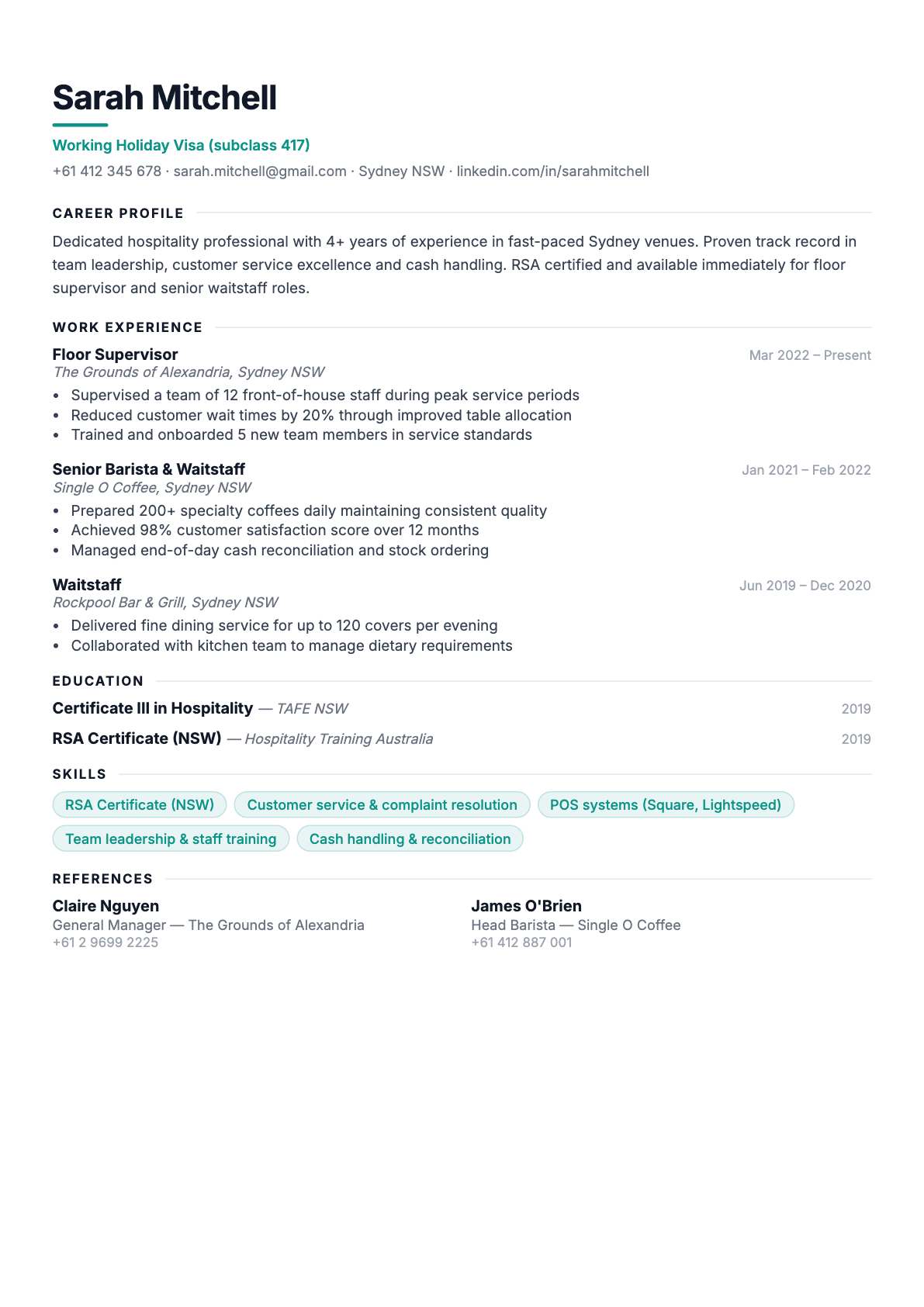
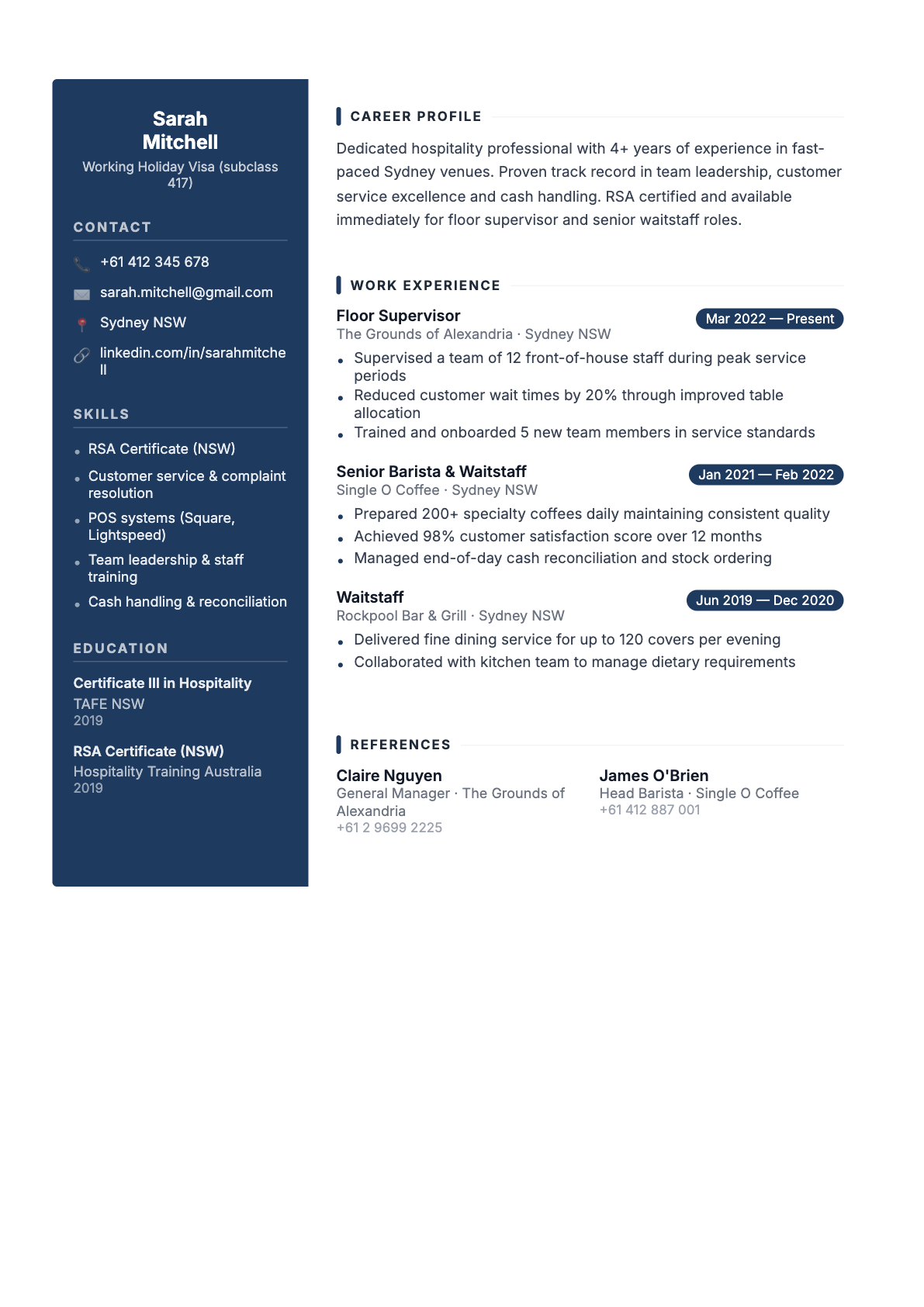
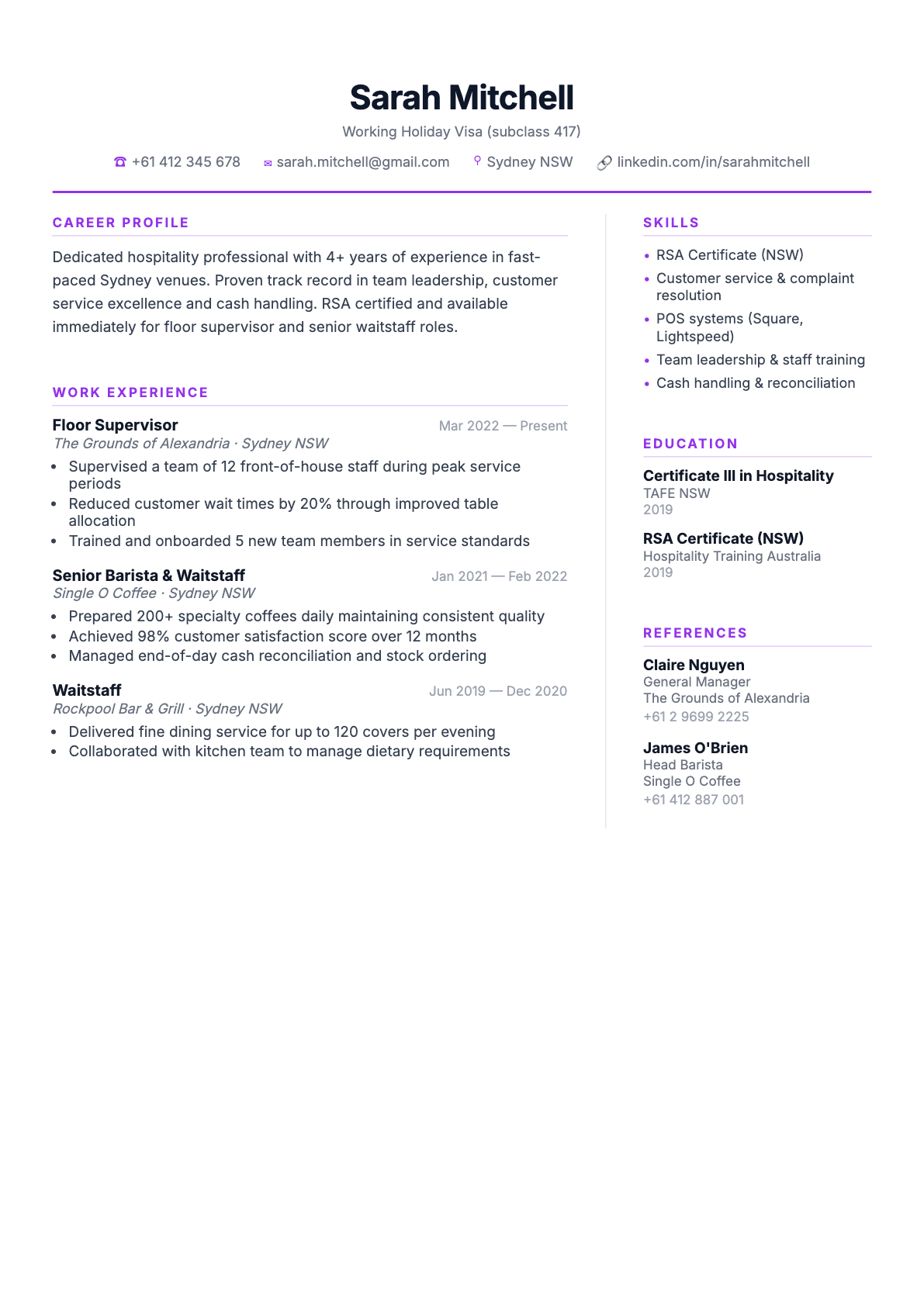
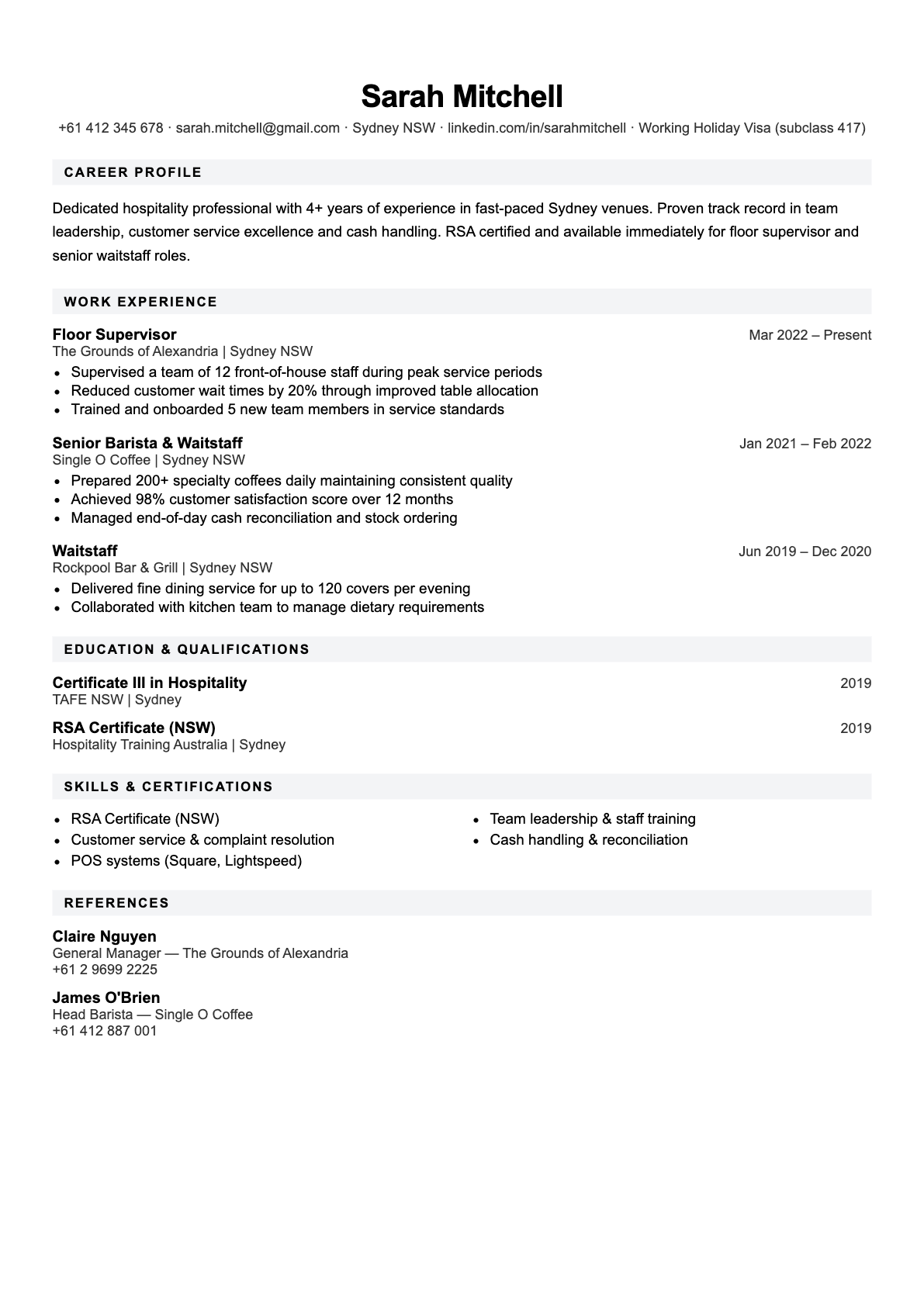
Australian resumes are typically 2 pages max, written in English, with no photo, no date of birth, no marital status, and always include at least 2 professional references. The Australian resume format is quite different from European CVs — no hobbies section, every line should justify why you're the right candidate. The tone is direct and results-focused, with action verbs and quantified achievements.
How long should an Australian resume be?▾
2 pages maximum — that's the Australian standard. Recruiters here value conciseness. If you have less than 5 years of experience, aim for 1 page. Focus on your most recent and relevant roles, and cut anything older than 10 years unless it's directly relevant.
How many references do I need on an Australian CV?▾
At least 2 professional references are expected on an Australian resume — unlike in most European countries where references are rarely included. Always ask permission before listing someone as a reference.
Will my CV and cover letter be in English?▾
Yes. Regardless of the interface language you choose, your CV and cover letter are always generated in Australian English. AussieCV offers three resume templates for Australia — Classic, Modern, and Minimal — fully customisable with your colours and fonts.
Is there a subscription?▾
No. AussieCV is an Australian resume builder with a one-time payment model — 14.90 AUD gives you 30 days of unlimited downloads. Clean, watermark-free PDF. No subscription, no recurring charges.
Is an Australian CV the same thing as a resume?▾
In practice, yes. In Australia the two words describe the same document for almost every job, and adverts use them interchangeably. The distinction only genuinely exists in academia, where an academic CV runs to several pages of publications and research. For a job in hospitality, on a farm or in retail, look no further.
Do you need an Australian phone number?▾
As soon as you have one, yes. An overseas number signals a candidate who has not arrived yet, and many recruiters will not call internationally. A prepaid SIM costs a few dollars and settles the question. Write it in local format: +61 4XX XXX XXX. Until then, lead with your email.
Should your Tax File Number go on the resume?▾
Never. The TFN is confidential tax information you give your employer after being hired, through the declaration form. It has no place on an application. The same goes for your passport number, bank details or exact arrival date.
British or American spelling?▾
British — that is the Australian standard. Write organise not organize, colour not color, centre not center. A spellchecker set to American English will wave through forms that jump out at a local recruiter. AussieCV applies Australian spelling automatically during translation.
What if you have no work experience at all?▾
You have more than you think. Internships, summer jobs, volunteering, student societies, school projects: all of it becomes experience once you describe what you actually did. Move the Education section higher up, expand on transferable skills — teamwork, customer contact, languages — and back it with a cover letter that explains your situation.
How quickly do replies come?▾
In hospitality and retail in the major cities, expect a few days to two weeks. For regional farm work it is often faster, sometimes the same day. What changes the outcome is not timing but targeting: twenty applications with a tailored resume beat a hundred sends of the same generic file. And handing your resume over in person remains remarkably effective in Australia, particularly in hospitality.